

Australian households entered 2026 already stretched. Mortgage repayments had crept higher through three years of restrictive monetary policy, grocery bills had climbed faster than wages, and insurance premiums kept landing in letterboxes with double-digit increases. Then the Middle East flared up again, oil markets convulsed, and a fresh wave of energy-driven inflation began rippling through every aisle of every supermarket and every pump on every highway. The result is a household budget environment unlike anything Australians have navigated since the early 1980s, where the price of a barrel of Brent crude in the Persian Gulf now dictates whether a Brisbane family can afford their kids' winter sport registration.
This article unpacks what the 2026 energy shock means for ordinary household balance sheets, why the inflation pulse it has triggered is uniquely difficult to absorb, and the practical, prioritised strategies families can use to keep their finances intact while the geopolitical turbulence works its way through.
The Anatomy of the 2026 Energy Shock
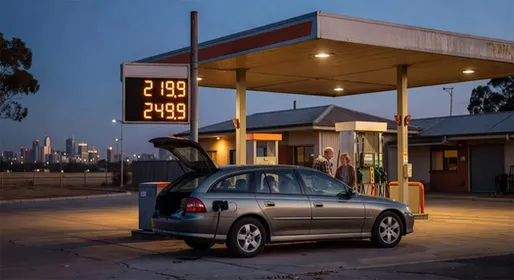
The trigger is geopolitical. Renewed conflict across the Middle East has pushed crude oil prices up roughly 50 per cent from their late-2025 lows, with Australian retail petrol prices climbing around 33 per cent and diesel an even steeper 41 per cent in a single month. For a typical two-car suburban family driving 30,000 kilometres a year between them, that translates to an extra $2,400 to $3,200 in annual fuel spending compared with twelve months earlier.
Why is Australia so exposed? Around 90 per cent of our refined fuel is imported from Asian refineries that depend heavily on Middle Eastern crude, and roughly 20 per cent of global oil flows through the Strait of Hormuz. When that chokepoint is threatened, freight insurance premiums spike, tanker routes lengthen, and the landed cost of every litre of petrol delivered to a Perth or Penrith service station rises before it even hits the bowser. Unlike the United States, which is now a net energy exporter, Australia has minimal domestic refining capacity left to absorb the shock.
The flow-through is mechanical. Diesel powers the trucks moving groceries from distribution centres to supermarkets. It powers the harvesters bringing in wheat, the trawlers bringing in seafood, and the excavators on every construction site. When diesel jumps 41 per cent in a month, those costs do not stay in the freight invoice; they migrate into shelf prices, restaurant menus, tradie quotes, and the cost of building a new home. The Reserve Bank's own modelling has long acknowledged that energy is one of the fastest-transmitting input costs in the consumer price basket.
Where the Inflation Pulse Lands in 2026
Commonwealth Bank economists have flagged that headline inflation could reach 5.4 per cent by the middle of 2026, with the trimmed mean - the RBA's preferred underlying measure - peaking near 3.8 per cent. That second number matters more than the first. Trimmed mean inflation strips out volatile items like fuel, but the longer energy costs stay elevated, the more they seep into core categories that the RBA cannot ignore. Once embedded, those second-round effects (wage demands, services pricing, insurance renewals) can take years to wash out.
For households, the practical effect is that the basket of goods feels far more expensive than the headline number suggests. Below is an indicative breakdown of how a typical family's monthly outlays have shifted between early 2025 and projected mid-2026 conditions.
| Household Category | Early 2025 ($/month) | Mid 2026 ($/month) | % Change |
|---|---|---|---|
| Petrol & diesel | $520 | $735 | +41% |
| Electricity & gas | $310 | $372 | +20% |
| Groceries | $1,400 | $1,540 | +10% |
| Insurance (home + auto) | $285 | $325 | +14% |
| Mortgage repayment (avg) | $3,250 | $3,420 | +5% |
Monthly Cost Increases by Category (% Change)
Add those categories together and a representative middle-income family is now looking at an extra $625 to $700 a month flowing out the door, before any discretionary spending. For households on fixed incomes, casualised work, or interest-only mortgages rolling to principal-and-interest, that gap is brutal.
The Mortgage Stress Multiplier
Roy Morgan's mortgage stress research had already pegged 26.8 per cent of mortgage holders as 'at risk' in March 2026, a level not seen sustainably since the GFC. If the RBA is forced into two further rate hikes to contain energy-driven second-round inflation, that figure is projected to climb to 30.9 per cent - meaning roughly one in three Australian mortgaged households would be spending so much on housing costs they cannot reliably cover the rest of their lives.
This is the cruel mathematics of stagflation-lite. Energy shocks push inflation up, which pushes the cash rate up, which pushes mortgage repayments up at the same time petrol and groceries are already eating the family budget. For deeper analysis of how this dynamic interacts with home loan serviceability, our explainer on the double squeeze on Australian mortgages remains essential reading, as does our breakdown of bank stress testing and your borrowing power for anyone considering refinancing in this environment.
Triage: Prioritising Household Expenses Under Pressure
When every category is rising at once, the instinct is to cut a bit from everything. That rarely works. A more effective approach is structured triage: rank every dollar of outgoing spend into four tiers and apply different rules to each.
Tier 1: Non-Negotiable Survival Costs
Housing (mortgage or rent), minimum utilities, basic groceries, essential medication, and statutory insurances. These are paid first, every cycle, without exception. If Tier 1 alone exceeds 70 per cent of after-tax income, the household has a structural problem that no amount of latte-skipping will solve - it requires a conversation with a broker, a lender hardship team, or a financial counsellor.
Tier 2: Productive Spending
Costs that generate or protect future income: tools of trade, work transport, childcare that enables employment, and education. Cutting these often costs more than it saves. They are protected, but optimised - swap, refinance, or restructure rather than eliminate.
Tier 3: Quality-of-Life Spending
Streaming, dining, sport, holidays, gifts, and hobbies. This is where conscious trade-offs live. Most households can reduce Tier 3 by 30 to 50 per cent for a defined period (say, 9 to 12 months) without serious wellbeing impact, provided the cuts are deliberate rather than guilt-driven.
Tier 4: Wealth-Building Allocations
Voluntary super contributions, savings sweeps, investment purchases. Counterintuitively, these should usually be protected rather than cut. Pausing super contributions or selling shares to pay current bills locks in long-term losses to fund short-term shocks - it is the financial equivalent of burning the furniture to heat the house.
Practical Strategies to Insulate Against Energy Volatility
Beyond the triage framework, there are concrete moves that materially reduce a household's exposure to the next leg of the energy crisis.
1. Refinance before the next hike, not after. If the RBA does deliver further increases, fixed-rate options will reprice within hours. Households still on rates secured 18 months ago should be running the numbers now. A good mortgage broker can model serviceability under multiple rate scenarios. Our piece on offset, redraw or split loans is a useful primer before that conversation.
2. Restructure fuel consumption. Petrol and diesel together now account for around 8 per cent of the average household budget, up from 5 per cent two years ago. Carpooling, consolidating errand trips, switching to weekly cycles for the supermarket run, and using fuel-price apps to time fills around the discount cycle can shave 15 to 25 per cent off the fuel bill. For two-car households, downgrading the second vehicle to a hybrid or smaller petrol model often pays back inside three years at current pump prices. Our deeper guide on fuel shocks and your household budget walks through this in detail.
3. Hedge energy bills where possible. Fixed-tariff electricity contracts, controlled-load hot water, and rooftop solar with battery storage all act as partial hedges against further price rises. The economics of solar-plus-battery have shifted decisively in 2026, with payback periods tightening as grid prices climb. See our analysis on energy price hedging for Australian households for specifics, and be aware of the looming energy rebate cliff and resulting bill shock as government subsidies taper.
4. Build a six-week buffer, not a six-month one. Traditional emergency-fund advice (three to six months of expenses) is unrealistic for many households in 2026. A more achievable target is a six-week buffer in a high-interest savings account, which is enough to absorb most genuine shocks (a broken-down car, an unexpected vet bill, a fortnight of lost income) without resorting to credit cards or buy-now-pay-later facilities at punishing effective interest rates. Our piece on credit card effective interest cost disclosure shows why this matters more than ever.
5. Audit insurance carefully. Premiums are rising, but cancelling cover to save cash is rarely the right answer. Increasing excesses, bundling policies, and reviewing whether life and TPD cover sits more efficiently inside super are usually better levers. The article on insurance inside super or standalone walks through the trade-offs.
6. Manage debt other than the mortgage ruthlessly. Credit cards, personal loans, and BNPL balances at 18 to 24 per cent rates compound dangerously when household cash flow is tight. Consolidating into a lower-rate facility, or using a redraw if the mortgage offers a meaningful arbitrage, often saves four-figure annual amounts. Be cautious of newer non-bank credit products - the risks are explored in our piece on private credit risks for Australian households.
The Hidden Categories That Catch Households Out
Three less obvious cost centres are worth flagging, because they tend to absorb energy-driven inflation silently.
Strata and council rates. Apartment owners are seeing strata levies jump materially as common-area lighting, lifts, pumps, and pool heating costs surge. Council rates are following, as local governments pass through fuel and energy costs in their road, waste, and parks budgets. Both are usually quarterly, so the shock arrives in lumps.
Schooling and extracurriculars. Private schools have already announced fee increases of 6 to 9 per cent for 2026, citing energy and wage pressures. Sport registration, music lessons, and tutoring are all rising similarly. Families with multiple children should map these costs across the full calendar year now, not in February when the invoices land.
Health and dental. Out-of-pocket costs for specialist visits, dental work, and allied health are rising faster than CPI. Private health insurance premiums lifted again in April 2026. Skipping preventive dental or physio appointments to save money usually leads to far larger bills 18 to 24 months later.
When to Get Professional Help
Some households can navigate the 2026 energy crisis with a spreadsheet and discipline. Others need outside expertise. Three triggers should prompt a call to a professional rather than another round of DIY budgeting.
First, if mortgage repayments plus essential bills exceed 75 per cent of after-tax income, a conversation with a mortgage broker about restructuring is overdue. Second, if you are self-employed or run a small business, an accountant can identify cash-flow leakage and tax-effective ways to manage rising input costs - relevant context sits in our coverage of the great SME pivot of 2026. Third, if the energy shock is forcing you to question retirement timelines, voluntary contribution levels, or insurance settings, a financial planner can model trade-offs in ways a spreadsheet cannot, drawing on insights similar to those in our article on retirement income strategies for super in 2026 and Australia's mid-2026 financial outlook.
The Longer View
Energy shocks are not new. Australia weathered the 1973 oil embargo, the 1979 Iranian revolution spike, the 1990 Gulf War, and the 2008 commodity blow-off. Households that emerged with their balance sheets intact shared three habits: they did not panic-cut productive or wealth-building spending; they negotiated hard on the big-ticket items (mortgage, insurance, energy contracts) rather than nibbling at small ones; and they treated the shock as a multi-year event rather than a one-quarter inconvenience.
The 2026 crisis layers on a complication those earlier shocks did not have: simultaneously high mortgage debt, embedded services inflation, and a cash rate that cannot fall meaningfully without re-igniting the very inflation that caused the problem. That makes household-level decisions more consequential, not less. Energy volatility may be set by events in the Strait of Hormuz, but the financial outcome in any given Australian home is still shaped overwhelmingly by the choices made at the kitchen table.
Stress-Test Your 2026 Budget
Energy-driven inflation will not pass quickly. Whether you need to refinance a mortgage, restructure cash flow, or rebuild a savings buffer, professional guidance pays for itself many times over in this environment. Connect with a qualified Australian specialist through the Finance Directory.
Find a Financial Planner Find a Mortgage BrokerDisclaimer: This article is general information only and does not constitute financial, tax, or legal advice. Figures cited are indicative and based on publicly available forecasts at the time of writing, including from the Reserve Bank of Australia, Roy Morgan, and major bank economic teams. Individual circumstances vary significantly. Always consult a licensed Australian financial adviser, registered tax agent, or qualified mortgage broker before making decisions about your household finances. Past performance and forecasts are not reliable indicators of future outcomes.




Leave Comment Below